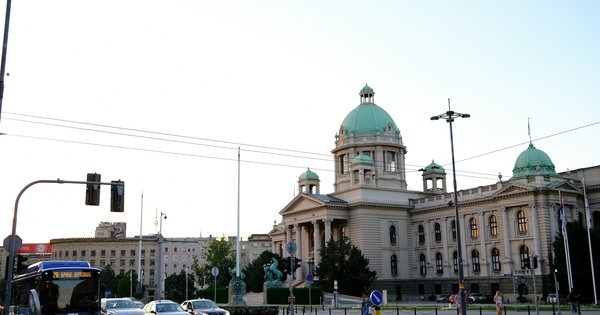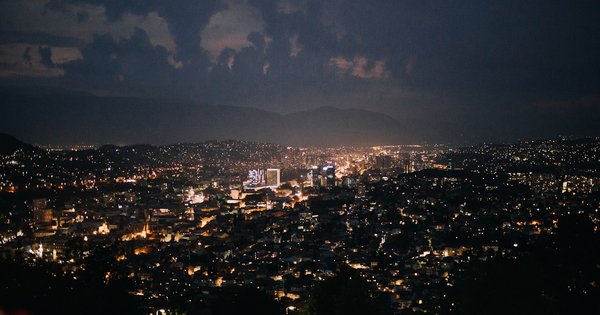
Bosnia and Herzegovina is one of those countries where you can’t answer “how are LGBTQ+ rights doing?” with a single sentence, because the country itself doesn’t speak with a single voice. Its political structure — two entities, a self-governing district, ten cantons, three constituent peoples, and a layer of state institutions sitting uneasily on top — means that a queer person’s rights can change depending on which side of an internal boundary they happen to be standing on. With Sarajevo Pride Week opening this week, it’s a good moment to lay out where things actually stand in 2026, honestly, with the wins and the losses side by side.
A genuine first: hate speech meets a court that says no
Start with the good news, because there is some. In early 2026, the Cantonal Court in Sarajevo upheld a lower court’s ruling against a member of the Cantonal Assembly who had posted content calling for the segregation of LGBTI people. The court found that Bosnia’s 2009 Act on the Prohibition of Discrimination — through its provisions against harassment and incitement to discrimination on the basis of sexual orientation — covered that speech. It was, by the accounts of local rights groups, the country’s first conviction for discrimination against the LGBTQ+ community to be confirmed on appeal.
That matters more than the single case. A protection that exists only on paper is a promise; a protection a court will actually enforce against a sitting politician is a fact. For activists who have spent years arguing that Bosnia’s anti-discrimination framework was real, the ruling was a long-awaited piece of evidence.
And in the same year: protections quietly narrowed
Now the harder part. 2026 has also delivered rollbacks, and they came from inside the legislatures.
In the Federation of Bosnia and Herzegovina — the entity that includes Sarajevo — lawmakers amended the Criminal Code to narrow the definition of a “close person” in provisions that protect people from domestic and partner violence, restricting it to partners of the opposite sex. The change was reportedly introduced in response to unfounded fears that a gender-neutral definition could open a back door to recognizing same-sex couples. The practical effect is bleaker than the legal theory: it strips a category of violence protection from same-sex partners to head off a recognition that wasn’t actually on the table.
In Republika Srpska, the other entity, the National Assembly went further, passing amendments that erased “gender identity” from the list of protected characteristics across provisions of its Criminal Code. Removing a category from the law doesn’t just lower a ceiling; it tells trans and gender-diverse people that the state has decided, deliberately, to stop counting them.
So Bosnia in 2026 is doing two contradictory things at once — a court affirming protections in Sarajevo while legislatures chip them away. Both are true. Anyone who tells you the country is simply “getting better” or simply “getting worse” is flattening a more complicated picture.
The Sarajevo–Banja Luka divide
The starkest fault line runs between the two entities. Pride exists in Bosnia — the seventh Pride March is set for June 20, the culmination of a Pride Week running June 13 through 21 — but it exists in the Federation. In Republika Srpska, authorities have repeatedly banned such gatherings, and the entity’s recent legislative moves have run in the opposite direction from Sarajevo’s courts. For a queer Bosnian, the protections you can count on depend heavily on geography. That’s an uncomfortable reality for a single country, and it’s one EU monitors have repeatedly flagged.
What still doesn’t exist
For all the activity, the baseline gaps are large. Bosnia and Herzegovina does not recognize same-sex partnerships or marriage, and it offers no path to joint adoption for same-sex couples. There is no provision at the state level prohibiting incitement to hatred on the basis of sexual orientation — the Sarajevo conviction rested on a cantonal-level interpretation of anti-discrimination law, not a nationwide hate-speech statute. Trans people face a legal landscape on gender recognition that is, at best, underdeveloped, and that just lost ground in Republika Srpska.
This is the context that makes the partnership question the central demand of Bosnian advocates. Neighboring Montenegro and Croatia have both built same-sex partnership frameworks; Bosnia has not, and the Federation’s “close person” amendment was, in part, an effort to make sure it stays that way.
Where EU accession fits
Like the rest of the Western Balkans, Bosnia’s path toward EU membership is the lever activists keep returning to. Fundamental-rights criteria are part of accession assessments, and the European Commission cites tools like ILGA-Europe’s Rainbow Map in its annual progress reports. In theory, that gives reform a powerful external sponsor. In practice, Bosnia’s internal divisions mean Brussels is negotiating with a state that can’t always deliver on its own commitments, because an entity-level legislature can move in the opposite direction the next week. EU pressure has helped elsewhere in the region; in Bosnia, it runs into the same structural wall everything else does.
The honest takeaway
If you’re a traveler, an ally, or simply someone trying to understand the region, here’s the fair summary. Bosnia and Herzegovina has a visible, resilient queer community that puts on a full Pride Week every June despite real risk. It has a court system that, at least once now, has enforced anti-discrimination protections against a politician. And it has legislatures that spent the same year narrowing protections and erasing trans people from the statute book. Progress and regression aren’t taking turns here — they’re happening simultaneously, in different rooms of the same house.
That’s not a reason for despair, and the people marching in Sarajevo this month clearly don’t read it that way. But it is a reason to be precise. The most useful thing outsiders can do for Bosnia’s LGBTQ+ community is to take its situation as seriously and specifically as the community takes it — neither writing the country off nor pretending the wins cancel the losses.
Sources: Wikipedia and ILGA-World/ILGA-Europe country databases on LGBTQ rights in Bosnia and Herzegovina, Balkan Insight, Eyewitness News (EWN), and Outright International.