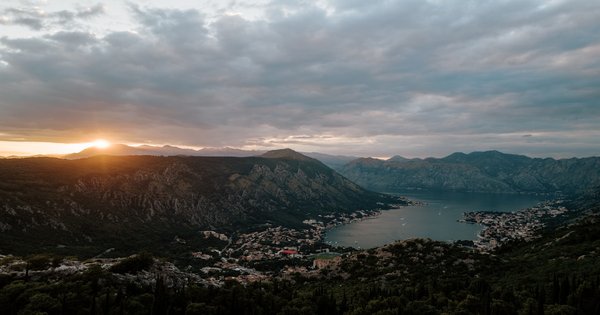
Montenegro is, by the European Commission’s own account, the most advanced candidate country in the entire EU accession process. As of mid-June, it had provisionally closed 16 of 33 negotiating chapters — essentially half — with a stated goal of finishing all of them by the end of this year and joining the EU by 2028. That includes a positive assessment on Chapter 23, the chapter covering judiciary and fundamental rights, which is the one that’s supposed to capture exactly this kind of issue. And yet on ILGA-Europe’s 2026 Rainbow Map, the country ranks 18th out of 49 with a score of 53% — respectable on paper, and a real distance from what “most advanced candidate” implies about how LGBTQ+ people are actually treated day to day.
What’s actually on the books
Montenegro isn’t starting from zero. Same-sex sexual activity has been legal and the age of consent equalized since 1977. A 2010 anti-discrimination law covers sexual orientation and gender identity across employment, education, health care, and access to goods and services, and 2013 amendments to the criminal code added hate crime and hate speech protections specifically for LGBT status. In July 2020, Montenegro legalized same-sex civil partnerships — “Life Partnerships” — giving couples most of the legal protections of marriage, with adoption rights explicitly carved out as the one exclusion.
That’s a more complete legal framework than several of Montenegro’s neighbors have managed. It’s also, according to Montenegro’s own Centre for Civic Education, a framework that isn’t actually being enforced the way it reads on paper.
The gap between the statute and the street
In a report published in May, the Centre for Civic Education laid out what it called “inadequate implementation of the Law on Same-Sex Life Partnership, the absence of adequate legal gender recognition, [and] weak institutional responses to hate speech and violence.” The organization’s argument isn’t that Montenegro lacks laws — it’s that the laws exist without the enforcement infrastructure to make them mean anything, and that public officials themselves are often part of the problem: the report specifically cites parliamentary discourse that weaponizes sexual orientation for political attacks, and public figures facing ridicule for nothing more than being gay.
That’s not an abstract critique. In January, LGBTIQ+ people in Podgorica were attacked with stones and bottles, accompanied by homophobic slurs — the kind of street-level violence that a strong hate-crime statute is supposed to prevent and prosecute, and evidently isn’t. In May, a Ricky Martin concert in Podgorica was disrupted when tear gas was discharged toward the stage, forcing an evacuation — an incident that, whatever its precise motive, landed at a show headlined by one of the most visible gay pop stars in the world, in a country whose civil society groups are actively warning that hate speech online is “encouraging perpetrators of violence” offline.
Gender recognition remains one of the framework’s weakest points: transgender Montenegrins can change their legal gender, but only after sex reassignment surgery, sterilization, and a formal medical diagnosis — a standard most of Western Europe has already moved away from, and one the Centre for Civic Education flags as part of the same implementation gap.
Why the accession angle matters
The Centre for Civic Education’s underlying argument is really about what EU membership is supposed to certify: “a society in which anyone must live cautiously because of their sexual orientation or gender identity cannot be described as free, democratic, or European.” Chapter 23 exists precisely to test that claim before a country gets to join, not after — and Montenegro passing its interim benchmark assessment while its own civil society groups are documenting stonings and unenforced hate-speech law is a genuine tension, not a contradiction that resolves itself with more paperwork.
None of this means Montenegro’s trajectory is going in reverse — the legal architecture from 2010, 2013, and 2020 represents real, deliberate progress, and it puts the country ahead of Serbia, Kosovo, and Bosnia on paper. But “ahead of the region” and “living up to what EU membership is supposed to require” are different bars, and Montenegro’s own advocates are the ones saying clearly that the country hasn’t cleared the second one yet.
Sources: Centre for Civic Education; New Union Post; ILGA-Europe Rainbow Map 2026; Wikipedia.