Every Pride season has a symbol that ends up standing in for something bigger. In Germany this year, it’s an empty flagpole.
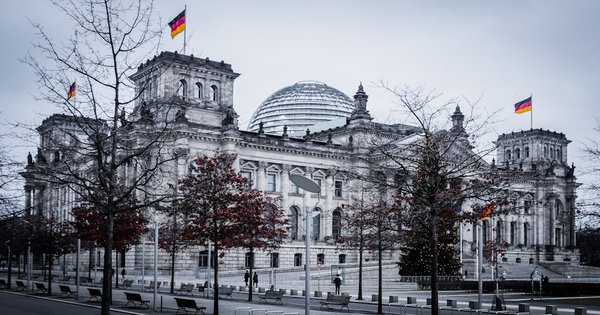
Bundestag President Julia Klöckner has ruled that the rainbow flag will fly above Berlin’s Reichstag — the seat of the German parliament — only once a year, to mark the International Day Against Homophobia, Biphobia, Intersexism and Transphobia (IDAHOBIT) on May 17. In previous years the flag was also raised for Christopher Street Day, the German name for the late-July Pride marches that commemorate the 1969 Stonewall uprising. Under the new policy, that won’t happen. The parliament’s administration has also formally withdrawn from participating in Berlin’s CSD parade, a presence it had maintained in past years.
For a country that has long presented itself as one of Western Europe’s reliably progressive anchors, it’s a striking shift — and the timing, as Pride season gets underway across German cities, is exactly the point.
What Klöckner decided, and how she justified it
Klöckner, a member of the center-right Christian Democratic Union (CDU), has grounded her decision in the language of institutional neutrality. The German flag, she has argued, already flies above the Reichstag and itself stands for “freedom, human dignity and equality before the law” — including, she’s stressed, the right to sexual self-determination. From that vantage point, she frames a separate rainbow flag as unnecessary rather than hostile.
The new house rules reportedly go further than the flagpole. They also instruct members of parliament to remove Pride symbols from their offices — a detail that turns an argument about one building’s facade into something that reaches individual lawmakers’ doors.
Chancellor Friedrich Merz, also of the CDU, backed the move, and did so in terms that landed badly with many: he said the Reichstag “is not a circus tent.” For LGBTQ+ Germans and their allies, the phrase crystallized the complaint — that what’s being called neutrality reads, in practice, as a deliberate distancing from a community that until recently enjoyed broad official support.
A bigger pattern than one flag
It would be easy to dismiss a flag dispute as symbolic theater. The reason it isn’t is the backdrop. Germany has seen a documented rise in anti-LGBTQ+ violence: organizations tracking far-right activity recorded incidents nearly doubling year over year, with cases counted in the triple digits. Pride marches across the country have increasingly drawn organized counter-protests from right-wing and neo-Nazi groups, who have learned to use the visibility of CSD events to stage their own.
In parts of eastern Germany, the far-right Alternative für Deutschland (AfD) has promoted a nationalist counter-celebration it calls “Stolzmonat” — “Pride Month” reclaimed as a chauvinist slogan — explicitly positioned against the rainbow one. Against that, the question of whether the national parliament will fly a flag for a few weeks in summer stops being decorative. It becomes a signal about which way official Germany is leaning.
Thomas Hoffmann, a board member organizing Berlin’s CSD, put the mood plainly: “For the first time, we find ourselves in a situation in which we are no longer advocating for more rights, but having to defend what we have already achieved.” That sentence could serve as a caption for much of Western Europe right now.
Berliners answered in their own way
If the institutional response has cooled, the street-level one has not. After the Reichstag flag ban made headlines, a Berlin metro station was repainted in rainbow colors — an unofficial, slightly cheeky rebuttal that captured the city’s instinct to fill any gap the establishment leaves. Berlin Pride organizers sharply criticized the Bundestag administration’s withdrawal, framing it as the kind of retreat that emboldens exactly the forces Pride exists to push back against.
Berlin’s CSD is scheduled for July 25, and it will go ahead, flag or no flag. Hundreds of thousands are still expected. The march doesn’t need the parliament’s pole to function — but the absence will be noticed, and that’s the part worth sitting with.
Why this matters beyond Germany
For those of us watching European LGBTQ+ rights from the Balkans and the road, Germany’s flag fight is a useful, uncomfortable reminder: progress isn’t a ratchet that only turns one way. A country can rank near the top of every rights index and still see its national legislature quietly step back from a community it once stood beside. The legal protections in German law haven’t changed — same-sex marriage, anti-discrimination rules, and gender self-determination all remain. What’s shifting is the temperature, the willingness of those in power to be seen on the side of queer people when it’s no longer cost-free.
That’s the thing about symbols. They cost almost nothing to offer, which is exactly why withdrawing them says so much. Germany’s queer communities will march anyway this summer — louder, probably, for having been told the parliament would rather stay neutral. But “defending what we have” is a different posture than “winning what’s next,” and across Western Europe more and more Pride organizers are finding themselves in it.
Sources: reporting from The Munich Eye, Yahoo News, Context (Thomson Reuters Foundation), CSD Berlin, and Scene Magazine.