Correction (September 28, 2026): This article originally said the event took place on Monday, September 22, that the movement has lost “$125 million a year”, that 90% of surveyed groups lost funding, and that the UK announced its £21 million pledge in New York. In fact, the event was on Monday, September 21; the movement has lost more than $125 million since January 2025, about 30% of its annual funding; Outright’s report found 203 of 229 groups (nearly 89%) lost funding; and the UK first announced its pledge in May.
UN human rights chiefs usually speak cautiously. At this year’s UN General Assembly, Volker Türk didn’t.
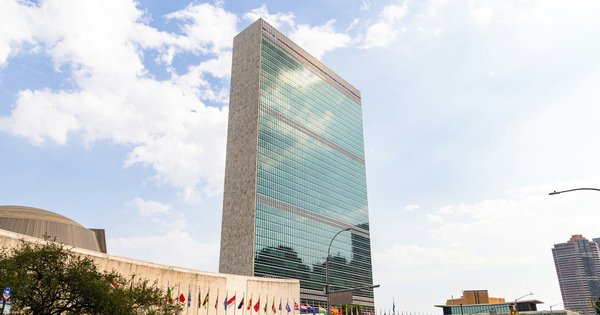
Speaking at the UN LGBTI Core Group’s high-level event in New York on Monday, September 21, the UN High Commissioner for Human Rights told diplomats and activists that LGBTIQ+ people are facing a “comprehensive onslaught” around the world. “The persecution of LGBTIQ+ people around the world is escalating at an alarming rate,” he said, according to the Washington Blade, which covered the event. “Today’s backlash is deep and it is coordinated.”
What Türk pointed to
Türk named two countries readers of this site will know well.
Turkey, where police raids on Istanbul’s LGBTIQ+ community this month led to mass detentions and a wave of arrests tied to the government’s “family” agenda. ILGA-Europe and ERA called it a coordinated crackdown on civil society.
Senegal, which increased penalties for consensual same-sex relations this year, in a country that already criminalised them.
He also described a broader tactic: governments labelling LGBTIQ+ organisations as “terrorists, extremists, or national security threats,” and using what he called “bigotry in the language of decency and morality.” Russia’s “extremist” designation of the “international LGBT movement” is the best-known example, but the tactic has spread. Georgia passed a Russian-style “family values” law in 2024, and Belarus’s parliament passed its own crackdown bill this spring. Inside the EU, the Court of Justice ruled in April that Hungary’s version breached the bloc’s founding values.
The money problem
The event took place during the worst funding crisis the global movement has faced. Earlier this month, Outright International published a survey of 229 organisations in 94 countries. It found that 203 of them, nearly 89%, have lost funding since January 2025, and almost half have lost more than half their budgets. Outright estimates the global movement has lost more than $125 million since January 2025, around 30% of its total annual funding, after the Trump administration froze foreign aid, shut down USAID and ended the State Department’s Global Equality Fund.
Two governments pointed to new money in New York:
- The Netherlands pledged €50 million, announced by Foreign Minister Sjoerd Sjoerdsma. It lands in the same week the country’s openly gay prime minister, Rob Jetten, visited the Stonewall Inn during the Assembly.
- The United Kingdom highlighted its £21 million pledge for 2026–2029, which it first announced in May, in remarks by Chris Elmore.
Speakers from Iceland, Malta, Brazil, Ireland, South Africa, Uruguay, France, Cabo Verde, Estonia and Sweden also addressed the event, which is co-chaired by Mexico and Norway.
The new pledges help, but they don’t cover the gap. €50 million and £21 million over several years are real commitments, but the movement has lost more than $125 million since January 2025. Groups on the ground have been blunt about what that has meant: IraQueer suspending safety training in Iraq, a community centre in Ecuador closing after a decade, and a Ukrainian organisation cutting specialist support hours.
An empty American chair
The United States withdrew from the Core Group in March 2025 and sent no official representative this year. That’s a big change for a government that helped build the Core Group and, until January 2025, had a dedicated special envoy for LGBTQI+ rights. That former envoy, Jessica Stern, attended anyway as a private citizen, as did former ambassador Eric Nelson.
For activists in the Balkans and Eastern Europe, the US pullback isn’t abstract. We’ve reported on how the end of US support has hit organisations in North Macedonia and across the region. European governments are now the funders many of these groups are relying on. It’s an open question whether European money can arrive fast enough, and whether it stays when the politics in Europe change.
Why this matters
A statement from the UN’s top human rights official doesn’t change any laws. What Türk’s language does is put on record, at the highest level of the UN system, that the rollback is organised and escalating. Activists can cite that in courtrooms, in EU accession talks and in funding applications. And Europe is where most of the replacement money is coming from, which makes these pledges one of the few pieces of good news in a hard year.