Most Pride events march past the landmarks. In Totnes, they climbed one.
On Saturday, September 26, around 400 people gathered at Totnes Castle in Devon to watch 30 flag bearers unfurl a 150-metre rainbow flag across the historic Norman landmark at 10am, the BBC reported. The event was called, with some affection for the medieval setting, “Capture the Castle”.
It was the centrepiece of the four-day Totnes Pride festival, and yes, it made some people online very upset. We’ll get to them. First, the good part.
Why a castle?
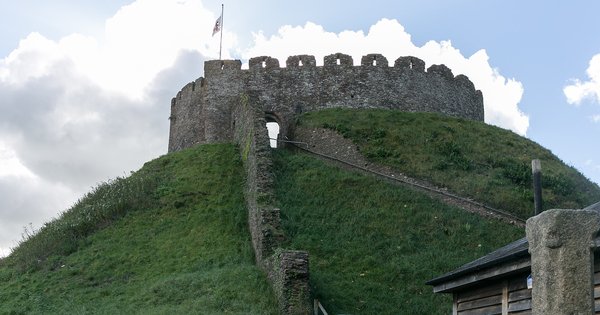
Totnes Castle is one of England’s best-preserved motte-and-bailey castles, a round stone keep on a grassy mound built by the Normans in the years after their conquest of England, Scene magazine noted.
Ceri Goddard from Totnes Pride told the BBC the group wanted something “a bit different” from a march: a piece of public art using “the iconic castle” to show that “queer people have always been here and we always will be.”
That’s the whole idea in one line. Queer people didn’t arrive in rural England yesterday. They’ve always lived in small towns, market towns and farming communities, often quietly. This was a morning of not being quiet.
A few details we love:
- The flag was borrowed from Torbay Pride, a neighbouring Devon Pride. Community flag-sharing is peak small-town energy.
- English Heritage, which looks after the castle, helped the organisers plan it, according to PinkNews.
- Entry was free. People were invited to bring flags, posters and picnics.
Organisers said in their preview that Capture the Castle was about “visibility, a history of resilience and joy – in equal measure.”
Totnes Pride is back
This wasn’t just any year. Totnes Pride was once described as the largest rural Pride in the country, then went quiet for three years, according to We Are South Devon. It has come back as a volunteer-run, community-led festival.
The 2026 theme was “Queer Joy”, with more than 40 events across 15 venues over four days, including:
- Hark, a live music concert at St Mary’s Church
- An LGBTQ+ film weekend at Totnes Cinema
- A four-day art exhibition of regional artists
- A Youth Pride party for under-25s at the Jamming Station
- The Big Queer Joy Party with a line-up of DJs
- Literature, poetry and art workshops
- A Queer Makers Market at Dartington’s Cider Press Centre
Goddard described Totnes to the BBC as “a very diverse community,” and said organisers expect even more people to get involved next year.
And now, the comments section
Of course there was backlash. According to PinkNews, some social media comments called the display “disgusting” and “absolutely ridiculous,” and some residents argued it diminished the castle’s history, one citing its “950 years of Norman history.”
Worth saying plainly: the flag was up for a morning, with the support of the organisation that runs the castle. The castle is fine. It has survived a lot longer than one Saturday of rainbow fabric.
One supporter summed up the other side nicely: “For one morning, an ancient building was used as the backdrop to tell part of the local community: you belong here too.”
Local Liberal Democrat MP Caroline Voaden said she was “so proud of the scale, diversity and quality of the Pride festival,” calling it “a clear message of equality and inclusion,” per PinkNews.
Why small-town Pride matters
City Prides get the headlines, the sponsors and the stadium-sized crowds. But for a lot of LGBTQ+ people, especially younger ones, home is a town like Totnes, not London or Manchester. A Youth Pride party down the road, or a flag on the castle you walk past every day, can land differently than any big-city parade.
It’s the same story we keep seeing across Europe this year, from Serbia’s Pride caravan in small towns to smaller Prides in AfD strongholds in eastern Germany. Visibility outside the big cities is where a lot of the real work happens, and where it often takes the most nerve.
Totnes did it with a borrowed flag, 30 volunteers, a picnic and a nearly thousand-year-old backdrop. Some people were furious. Around 400 people turned up anyway.
We know which side we’d rather be on.
Sources: BBC News, via Yahoo; PinkNews; Scene; We Are South Devon; Midweek Herald. Photo: Pymouss, CC BY-SA 4.0, via Wikimedia Commons.