Correction (September 28, 2026): This article originally said the switch to a Texas lab happened this month, that the health department said its savings covered shipping samples to Texas and back, that Seattle Children’s Hospital had denied under oath treating Texas-based patients, and that PFLAG was ordered to hand over membership records. In fact, the change took effect on August 1, 2026, the department said the Texas lab’s pricing includes shipping costs, Paxton sought records on Texas children treated in Seattle while the hospital said it provided no such care in Texas, and the court ordered PFLAG to hand over documents such as provider referral lists and communications, with families’ identities redacted.
For years, LGBTQ+ Americans have been moving out of Texas and into Washington state to get away from Attorney General Ken Paxton’s escalating campaign against queer medical records. Since August 1, some of their most sensitive health data has been making the opposite trip: from Seattle to San Antonio, in the form of blood.
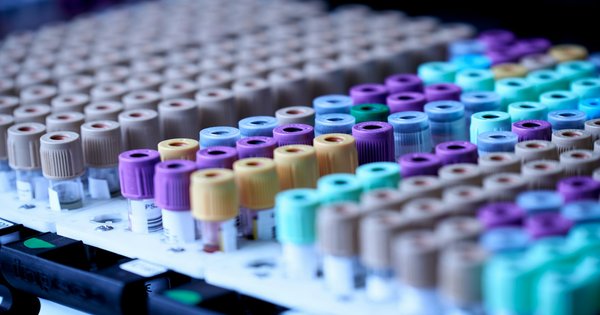
The Seattle LGBTQ+ Center’s HIV and STI testing has historically run through Public Health – Seattle & King County’s own labs. That changed after the Washington State Department of Health told the center it had to switch providers, according to reporting by Seattle Gay News. The new lab, in use since August 1, 2026, is the Center for Disease Detection, a LabCorp-owned facility in San Antonio, Texas — meaning blood samples, along with identifying information including sex assigned at birth, now travel to the same state whose attorney general has spent years trying to compile lists of transgender residents and subpoena hospitals for gender-affirming care records.
Why the destination matters
Paxton’s track record is the reason this particular lab switch is setting off alarms rather than passing unnoticed. In 2024, it took a court settlement to stop him from demanding Seattle Children’s Hospital hand over gender-affirming care records for trans minors from Texas, even though the hospital said it provided no gender-affirming care in Texas and none of its few Texas-based remote staff were involved in it. He was the first known elected official in the country to order the compilation of a list of transgender residents, and he directed the Texas Department of Public Safety to stop processing gender-marker changes on driver’s licenses even when a court ordered otherwise, routing information about anyone who tried into a dedicated tracking account. Earlier this year, he won a Texas Supreme Court ruling forcing PFLAG and other advocacy groups to turn over documents as part of an investigation into banned gender-affirming care for minors.
Against that backdrop, sending HIV test results — plus the identifying details attached to them — into a Texas-based lab reads differently than a routine vendor change.
What the health department says
Seattle LGBTQ+ Center executive director Nakita Venus told SGN the center didn’t have a say in the switch: the contract sits between the Washington Department of Health and King County, not the center itself, and the center’s priority was making sure testing continued without a gap. Department of Health spokesperson Mark Johnson said the decision came down to cost. “The price differential between the local lab and the CDD is quite significant,” he said, adding that the Texas lab’s pricing includes shipping costs, and that no other lab could match the Center for Disease Detection’s pricing. Johnson also said the switch has sped up turnaround times, letting people diagnosed with HIV, syphilis, gonorrhea, chlamydia, or hepatitis C get linked to care and treatment faster.
Those are real, defensible reasons for a public health agency operating on a tight budget. They don’t cancel out the discomfort of routing queer Washingtonians’ health data through a lab located in a state actively building infrastructure to identify and track trans and queer residents.
The bigger picture
Washington has become one of the most visible landing spots for LGBTQ+ people leaving red states, a trend significant enough that the Seattle LGBTQ Commission pushed the city earlier this year to declare a state of emergency to free up resources for the new arrivals. The HIV testing lab switch is a reminder that geography alone doesn’t fully insulate people from the reach of states pursuing their medical information — data infrastructure crosses state lines even when people are trying not to.
No one involved has suggested the lab switch was designed with data-gathering in mind, and the Department of Health’s cost and speed rationale is plausible on its own terms. But given how directly Texas has pursued LGBTQ+ medical records elsewhere, it’s a reasonable thing for patients to ask their providers about — and a reasonable thing for Washington’s health agencies to account for the next time a contract comes up for renewal.