Correction (September 28, 2026): This article originally said Belgrade Pride had redrawn its 2026 route via the Faculty of Law because the path past the National Assembly was blocked. That was the 2025 route. In fact, the announced 2026 route ran from Manjež Park via Nemanjina, Kneza Miloša and Kralja Milana to the National Assembly and back.
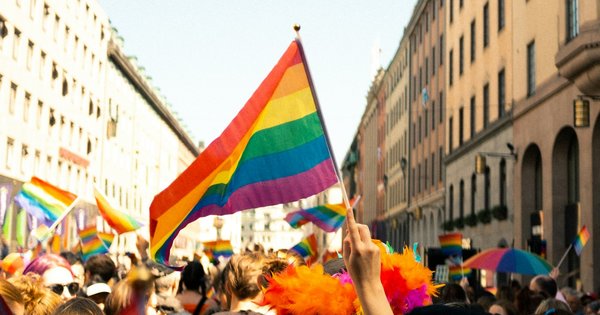
By this time tomorrow, several thousand people will be gathering at Manjež Park in central Belgrade for the moment Serbia’s LGBTQ+ community builds toward every year: the Pride Protest March. Entry checkpoints open at 4 p.m. on Saturday, September 5, with the march itself stepping off at 5 p.m. behind a drumming band and music trucks, working its way through the city center before returning to the park.
Pride Week has been running since Monday, August 31, filling the days before the march with exhibitions, theater, panel discussions, sports events, and parties. But the march has always been the point — and organizers keep calling it a “protest” march rather than a celebration on purpose. It is, in the organization’s own words, the week’s central activist moment, when LGBTI+ people publicly demand rights that Serbia still doesn’t extend to them.
The route runs to parliament. The demands haven’t changed.
The 2026 march runs from Manjež Park along Nemanjina and Kneza Miloša streets, then Kralja Milana and Nikola Pašić Square to the National Assembly, before returning along Kneza Miloša and Nemanjina to the park. It’s a logistical detail, but a telling one — even a march with more than a decade of precedent still has to register its exact shape with the police, year by year.
What hasn’t moved an inch is the demand list. At the top, again, is passage of a Law on Same-Sex Partnerships — legislation that has been drafted and shelved by successive governments for years, leaving same-sex couples in Serbia with no next-of-kin rights, no shared property protections, and no automatic say in a partner’s medical care. Alongside it: a Gender Identity Law, faster and more consistent access to transition-related healthcare, real consequences for hate crimes and hate speech, and a formal state apology to everyone prosecuted for their sexual orientation or gender identity before Serbia decriminalized same-sex relations in 1994.
Marching into a country already in the streets
This year’s march arrives against a heavier backdrop than usual. Serbia has spent months in the grip of large-scale, student-led protests that reshaped the national political mood well before Pride Week began. Organizers have leaned into that overlap rather than away from it, framing LGBTI+ rights as one part of a broader demand for a state that answers to its citizens. It’s a framing that has pulled Belgrade Pride into wider solidarity — and, this year more than most, into a country where public demonstration itself is already a live, contested question.
Serbia is also a European Union candidate country, and Brussels tracks the treatment of LGBTI+ people as part of its rule-of-law and fundamental-rights reporting on accession candidates. Every year the partnership law doesn’t move is another data point in that file. Belgrade Pride’s organizers know it, which is part of why the same demands get repeated instead of softened: the record is the leverage.
What tomorrow will actually look like
Practically, expect the march to be heavily policed, as it has been every year since organizers reestablished it on stable footing in 2014 after a period when Belgrade Pride was banned outright over “security concerns.” That police presence is real progress from the early 2010s, when the marches that did happen were met with rioting from far-right groups — but it’s also a plain acknowledgment that the threat it’s protecting against hasn’t disappeared.
If you’re in Belgrade for it, get to the Manjež Park area before 4 p.m.; central streets tend to see rolling closures in the hours beforehand. The march itself is the visible, secured core of the week. Pride Week’s cultural programming — panels, film screenings, performances — is where the community has actually been spending its time this week, in venues scattered around the city, away from the security perimeter that surrounds Saturday’s route.
Twenty-plus years after Belgrade’s first, disastrous attempt at a Pride march ended in violence within minutes, the fact that Saturday’s route is a matter of logistics rather than an open question of survival says something real about how far the event has come. Whether that same distance shows up in Serbia’s law books — where same-sex couples still have no legal recognition at all — is the question this march keeps marching to answer, one more year in a row.
Sources: Belgrade Pride — official site; Belgrade Pride, via TravelGay; PinkUK Balkans Pride listings.